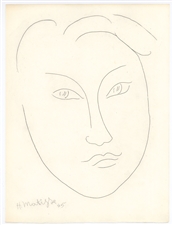
 Henri Matisse original etching for Alternance
Medium: original etching. Printed in 1946 at the atelier Lacouriere on BFK Rives paper and published in a limited edition of 300 for the "Alternance" portfolio (a collective art and literary project). Size: 13 x 9 5/8 inches (330 x 245 mm). Signed in the plate (not by hand).

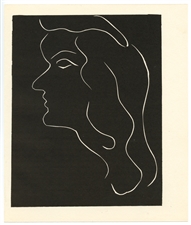 Henri Matisse original woodcut for Pierre a feu | Les miroirs profonds
Medium: original woodcut. Printed in 1947 in an edition of 950 on Rives wove paper for "Pierre a feu / Les miroirs profonds" and published in Paris by Maeght. Image size: 8 1/4 x 6 1/2 inches (210 x 167 mm). Sheet size: 9 1/2 x 8 inches (240 x 203 mm). There is printed text on verso, as issued. Not signed.
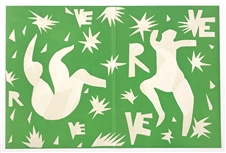 Henri Matisse lithograph for Verve "Icarus"
Medium: lithograph (after the découpage). Printed in 1945; Matisse executed this composition for the cover of the art revue Verve (Volume IV, Number 13 -- the "De la Couleur" issue). Size: 14 x 21 1/2 inches (360 x 545 mm). This work was published as a folded sheet with another lithograph printed on the back. Please note, this listing is for the cover lithograph only and does not include any other lithographs from this edition. Not signed.
Condition: in better condition than normally found; there are some areas of discoloration and small tears at the top center and bottom center of the sheet.
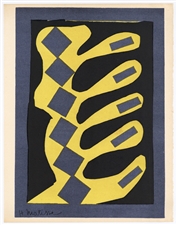 Henri Matisse lithograph | Decoupage for XXe Siecle
Medium: lithograph (after the découpage). This impression was printed in 1954 for XXe Siecle (issue No. 4) and published in Paris by San Lazzaro. The full sheet measures 12 3/8 x 9 1/2 inches (314 x 241 mm). Signed in the plate, not by hand.
Condition: there is some creasing to the paper.
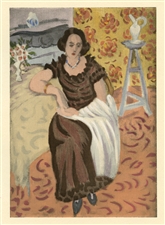 Henri Matisse "Femme en robe brune" pochoir
Medium: pochoir (after the watercolor). Printed in 1924 and published in Paris by Albert Morance for "L'Art d'Aujourd'hui". The publisher's provenance inscription is printed beneath the image. Image size: 7 x 5 inches (180 x 125 mm). Not signed.
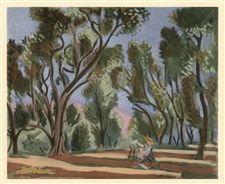 Henri Matisse "Oliviers" pochoir
Medium: pochoir (after the watercolor). Published in Paris in 1924 by Albert Morance for "L'Art d'Aujourd'hui", and now very scarce. The publisher's provenance inscription is printed beneath the image. Size: 6 1/2 x 7 3/4 inches (image). Signed in the plate (not by hand).
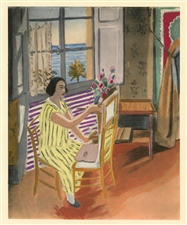 Henri Matisse "La seance du matin" pochoir
Medium: pochoir (after the watercolor). Published in Paris in 1924 by Albert Morance for "L'Art d'Aujourd'hui", and now very scarce. The publisher's provenance inscription is printed beneath the image. Image size: 7 7/8 x 6 3/8 inches (200 x 160mm). Signed in the plate (not by hand).
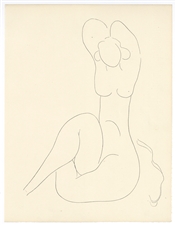 Henri Matisse engraving, 1933 | Poesies de Mallarme
Medium: engraving (after the 1932 etching for Poésies de Mallarmé). Printed in 1933 on watermarked Montgolfier laid paper and published in Paris by Arts et Métiers Graphiques. Size: 12 1/4 x 9 3/8 inches (310 x 238 mm). Not signed.
 Henri Matisse lithograph "Angele Lamotte"
Medium: lithograph. Printed in 1945 on Marais paper and published in Paris by Teriade for his art revue Verve (Volume IV, Number 13). Size: 13 3/4 x 10 1/8 inches (348 x 258 mm). There is a different composition on the back, as published. Signed in the plate (not by hand).
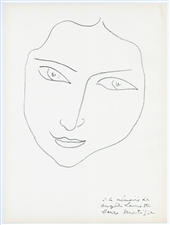 Henri Matisse lithograph "Angele Lamotte"
Medium: lithograph. Printed in 1945 on Marais paper and published in Paris by Teriade for his art revue Verve (Volume IV, Number 13). Size: 13 3/4 x 10 1/8 inches (348 x 258 mm). There is a different composition on the back, as published. Signed in the plate (not by hand).
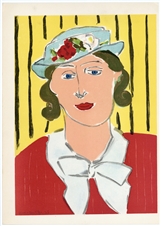 Henri Matisse lithograph "Femme au chapeau"
Medium: lithograph. Printed by Mourlot and published in Paris by Teriade for Verve (Volume 1, Number 5-6), in 1939. Image size: 12 1/2 x 9 inches (317 x 227 mm). Sheet size: 14 x 9 7/8 inches (353 x 250 mm). Signed in the plate (not by hand).
Condition: there is some soiling and the margin is narrow on the right side.
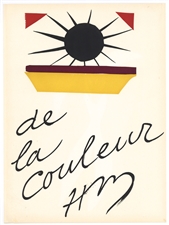 Henri Matisse "De la Couleur" pochoir
Medium: pochoir. Published in Paris in 1945 by Teriade for Verve (Volume IV, No. 13). This was the title page composed by Matisse for the special "De la Couleur" issue, now rare. Printed on Marais wove paper. Sheet size: 13 3/4 x 10 1/4 inches (350 x 258 mm). Signed in the plate (not by hand).
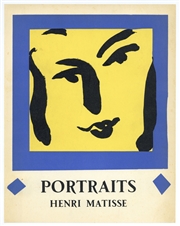 Henri Matisse lithograph for Portraits, 1955
Medium: lithograph (after the drawing). Executed by Matisse especially for the cover of "Portraits", printed at the atelier Mourlot and published in 1954. The image measures 8 5/8 x 8 5/8 inches (220 x 220 mm) and the full sheet size is 12 1/8 x 9 1/2 inches (308 x 242 mm). Please note, this listing is for the front cover lithograph only and does not include any other lithographs from this edition. Not signed.
Condition: this was the actual cover and there is age-toning and discoloration to the paper.
 Henri Matisse lithograph | Pierre Matisse Gallery
Medium: lithograph (after the drawing). This piece is from a rare suite of lithographs issued by the Pierre Matisse Gallery during the 1950's. The total sheet measures 10 1/4 x 7 3/4 inches (263 x 199 mm). Signed in the plate (not signed by hand).
 Henri Matisse lithograph | Pierre Matisse Gallery
Medium: lithograph (after the drawing). This piece is from a rare suite of lithographs issued by the Pierre Matisse Gallery during the 1950's. The total sheet measures 10 1/4 x 7 3/4 inches (262 x 195 mm). Signed in the plate (not signed by hand). There is another image printed on back, as issued.
 Henri Matisse lithograph | Pierre Matisse Gallery
Medium: lithograph (after the drawing). This piece is from a rare suite of lithographs issued by the Pierre Matisse Gallery during the 1950's. The total sheet measures 10 1/2 x 7 3/4 inches (268 x 200 mm). Signed in the plate (not signed by hand).
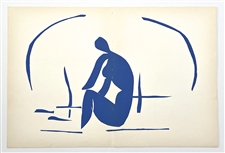 Henri Matisse lithograph "Baigneuse dans les roseaux"
Medium: lithograph (after the découpage and gouache). Printed in 1958 at the Mourlot Freres atelier and published in Paris by Teriade for the art revue Verve. Size: 14 x 20 3/4 inches (353 x 525 mm). There is a center fold, as issued. Not signed.
Condition: there is age-toning to the paper; with wear and stitch holes along the center crease from the publisher's binding.
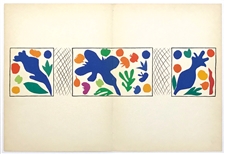 Henri Matisse lithograph "Coquelicots"
Medium: lithograph (after the decoupage and gouache). Published in Paris by Teriade for Verve in 1958. Size: 14 x 20 3/4 inches (355 x 525 mm). There is a center fold, as issued. Not signed.
Condition: there is age-toning to the paper, and stitch holes along the center crease from the publisher's binding.
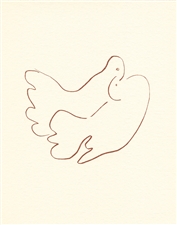 Henri Matisse lithograph | Florilege de Ronsard
Medium: lithograph (after the the original lithograph). Printed in sanguine ink on cream laid paper from the Papeteries Casteljoux and published in Geneva by Edito-Service in 1970. This reproduces one of the 1948 Matisse lithographs for Florilege des amours de Ronsard. Size: 11 x 8 1/2 inches (280 x 215 mm). Not signed.
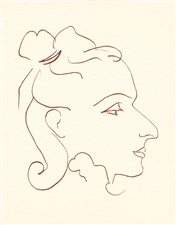 Henri Matisse lithograph | Florilege de Ronsard
Medium: lithograph (after the the original lithograph). Printed in sanguine ink on cream laid paper from the Papeteries Casteljoux and published in Geneva by Edito-Service in 1970. This reproduces one of the 1948 Matisse lithographs for Florilege des amours de Ronsard. Size: 11 x 8 1/2 inches (280 x 215 mm). Not signed.
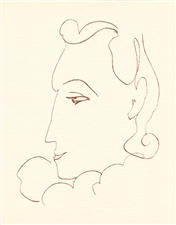 Henri Matisse lithograph | Florilege de Ronsard
Medium: lithograph (after the the original lithograph). Printed in sanguine ink on cream laid paper from the Papeteries Casteljoux and published in Geneva by Edito-Service in 1970. This reproduces one of the 1948 Matisse lithographs for Florilege des amours de Ronsard. Size: 11 x 8 1/2 inches (280 x 215 mm). Not signed.
 Henri Matisse lithograph | Florilege de Ronsard
Medium: lithograph (after the the original lithograph). Printed in sanguine ink on cream laid paper from the Papeteries Casteljoux and published in Geneva by Edito-Service in 1970. This reproduces one of the 1948 Matisse lithographs for Florilege des amours de Ronsard. Size: 11 x 8 1/2 inches (280 x 215 mm). Not signed.
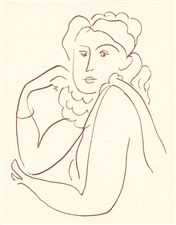 Henri Matisse lithograph | Florilege de Ronsard
Medium: lithograph (after the the original lithograph). Printed in sanguine ink on cream laid paper from the Papeteries Casteljoux and published in Geneva by Edito-Service in 1970. This reproduces one of the 1948 Matisse lithographs for Florilege des amours de Ronsard. Size: 11 x 8 1/2 inches (280 x 215 mm). Not signed.
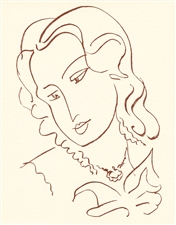 Henri Matisse lithograph | Florilege de Ronsard
Medium: lithograph (after the the original lithograph). Printed in sanguine ink on cream laid paper from the Papeteries Casteljoux and published in Geneva by Edito-Service in 1970. This reproduces one of the 1948 Matisse lithographs for Florilege des amours de Ronsard. The full sheet size is 11 x 8 1/2 inches (280 x 215 mm). Not signed.
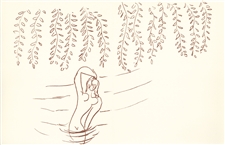 Henri Matisse lithograph | Florilege de Ronsard
Medium: lithograph (after the the original lithograph). Printed in sanguine ink on cream laid paper from the Papeteries Casteljoux and published in Geneva by Edito-Service in 1970. This reproduces one of the 1948 Matisse lithographs for Florilege des amours de Ronsard. Size: 11 x 17 inches (280 x 433 mm). There is a center fold, as published. Not signed.
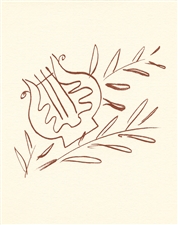 Henri Matisse lithograph | Florilege de Ronsard
Medium: lithograph (after the the original lithograph). Printed in sanguine ink on cream laid paper from the Papeteries Casteljoux and published in Geneva by Edito-Service in 1970. This reproduces one of the 1948 Matisse lithographs for Florilege des amours de Ronsard. Size: 11 x 8 1/2 inches (280 x 215 mm). Not signed.
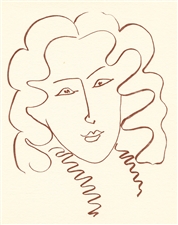 Henri Matisse lithograph | Florilege de Ronsard
Medium: lithograph (after the the original lithograph). Printed in sanguine ink on cream laid paper from the Papeteries Casteljoux and published in Geneva by Edito-Service in 1970. This reproduces one of the 1948 Matisse lithographs for Florilege des amours de Ronsard. Size: 11 x 8 1/2 inches (280 x 215 mm). Not signed.
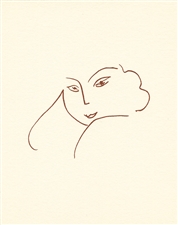 Henri Matisse lithograph | Florilege de Ronsard
Medium: lithograph (after the the original lithograph). Printed in sanguine ink on cream laid paper from the Papeteries Casteljoux and published in Geneva by Edito-Service in 1970. This reproduces one of the 1948 Matisse lithographs for Florilege des amours de Ronsard. Size: 11 x 8 1/2 inches (280 x 215 mm). Not signed.
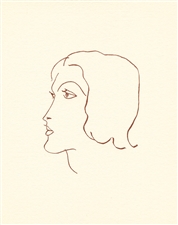 Henri Matisse lithograph | Florilege de Ronsard
Medium: lithograph (after the the original lithograph). Printed in sanguine ink on cream laid paper from the Papeteries Casteljoux and published in Geneva by Edito-Service in 1970. This reproduces one of the 1948 Matisse lithographs for Florilege des amours de Ronsard. Size: 11 x 8 1/2 inches (280 x 215 mm). Not signed.
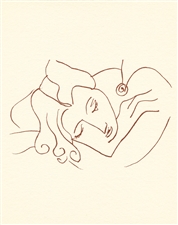 Henri Matisse lithograph | Florilege de Ronsard
Medium: lithograph (after the the original lithograph). Printed in sanguine ink on cream laid paper from the Papeteries Casteljoux and published in Geneva by Edito-Service in 1970. This reproduces one of the 1948 Matisse lithographs for Florilege des amours de Ronsard. Size: 11 x 8 1/2 inches (280 x 215 mm). Not signed.
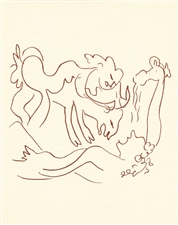 Henri Matisse lithograph | Florilege de Ronsard
Medium: lithograph (after the the original lithograph). Printed in sanguine ink on cream laid paper from the Papeteries Casteljoux and published in Geneva by Edito-Service in 1970. This reproduces one of the 1948 Matisse lithographs for Florilege des amours de Ronsard. Size: 11 x 8 1/2 inches (280 x 215 mm). Not signed.
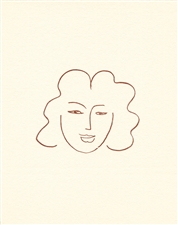 Henri Matisse lithograph | Florilege de Ronsard
Medium: lithograph (after the the original lithograph). Printed in sanguine ink on cream laid paper from the Papeteries Casteljoux and published in Geneva by Edito-Service in 1970. This reproduces one of the 1948 Matisse lithographs for Florilege des amours de Ronsard. Size: 11 x 8 1/2 inches (280 x 215 mm). Not signed.
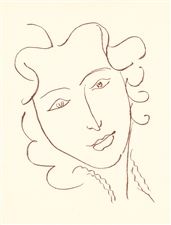 Henri Matisse lithograph | Florilege de Ronsard
Medium: lithograph (after the the original lithograph). Printed in sanguine ink on cream laid paper from the Papeteries Casteljoux and published in Geneva by Edito-Service in 1970. This reproduces one of the 1948 Matisse lithographs for Florilege des amours de Ronsard. Size: 11 x 8 1/2 inches (280 x 215 mm). Not signed.
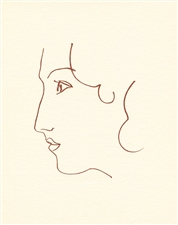 Henri Matisse lithograph | Florilege de Ronsard
Medium: lithograph (after the the original lithograph). Printed in sanguine ink on cream laid paper from the Papeteries Casteljoux and published in Geneva by Edito-Service in 1970. This reproduces one of the 1948 Matisse lithographs for Florilege des amours de Ronsard. Size: 11 x 8 1/2 inches (280 x 215 mm). Not signed.
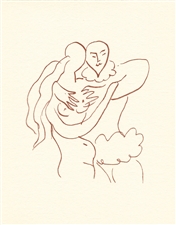 Henri Matisse lithograph | Florilege de Ronsard
Medium: lithograph (after the the original lithograph). Printed in sanguine ink on cream laid paper from the Papeteries Casteljoux and published in Geneva by Edito-Service in 1970. This reproduces one of the 1948 Matisse lithographs for Florilege des amours de Ronsard. Size: 11 x 8 1/2 inches (280 x 215 mm). Not signed.
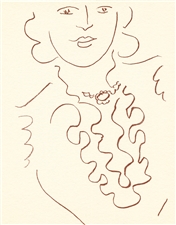 Henri Matisse lithograph | Florilege de Ronsard
Medium: lithograph (after the the original lithograph). Printed in sanguine ink on cream laid paper from the Papeteries Casteljoux and published in Geneva by Edito-Service in 1970. This reproduces one of the 1948 Matisse lithographs for Florilege des amours de Ronsard. Size: 11 x 8 1/2 inches (280 x 215 mm). Not signed.
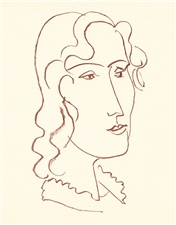 Henri Matisse lithograph | Florilege de Ronsard
Medium: lithograph (after the the original lithograph). Printed in sanguine ink on cream laid paper from the Papeteries Casteljoux and published in Geneva by Edito-Service in 1970. This reproduces one of the 1948 Matisse lithographs for Florilege des amours de Ronsard. Size: 11 x 8 1/2 inches (280 x 215 mm). Not signed.
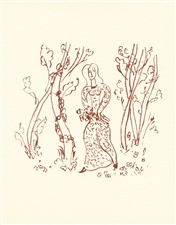 Henri Matisse lithograph | Florilege de Ronsard
Medium: lithograph (after the the original lithograph). Printed in sanguine ink on cream laid paper from the Papeteries Casteljoux and published in Geneva by Edito-Service in 1970. This reproduces one of the 1948 Matisse lithographs for Florilege des amours de Ronsard. Size: 11 x 8 1/2 inches (280 x 215 mm). Not signed.
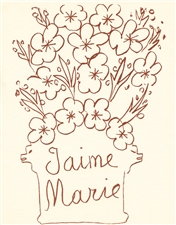 Henri Matisse lithograph | Florilege de Ronsard
Medium: lithograph (after the the original lithograph). Printed in sanguine ink on cream laid paper from the Papeteries Casteljoux and published in Geneva by Edito-Service in 1970. This reproduces one of the 1948 Matisse lithographs for Florilege des amours de Ronsard. Size: 11 x 8 1/2 inches (280 x 215 mm). Not signed.
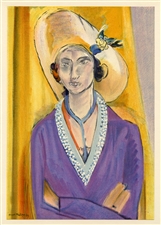 Henri Matisse lithograph "The Yellow Hat"
Medium: lithograph (after the painting). Printed in Paris on smooth wove paper at the atelier Mourlot and published in 1954. Size: 9 1/4 x 6 1/2 inches (235 x 163 mm). Signed in the plate (not by hand).
Condition: this lithograph was attached by the publisher (along the top edge) onto a larger support sheet.

